Sewer Repair Service in Las Vegas, NV
Root intrusions, bellies, offset joints and cracked pipe all end the same way: a line that backs up no matter how many times it is cleared. We locate the fault precisely, show you the footage, and repair the section that actually failed.
Fixing the Section That Failed, Not the Whole Yard
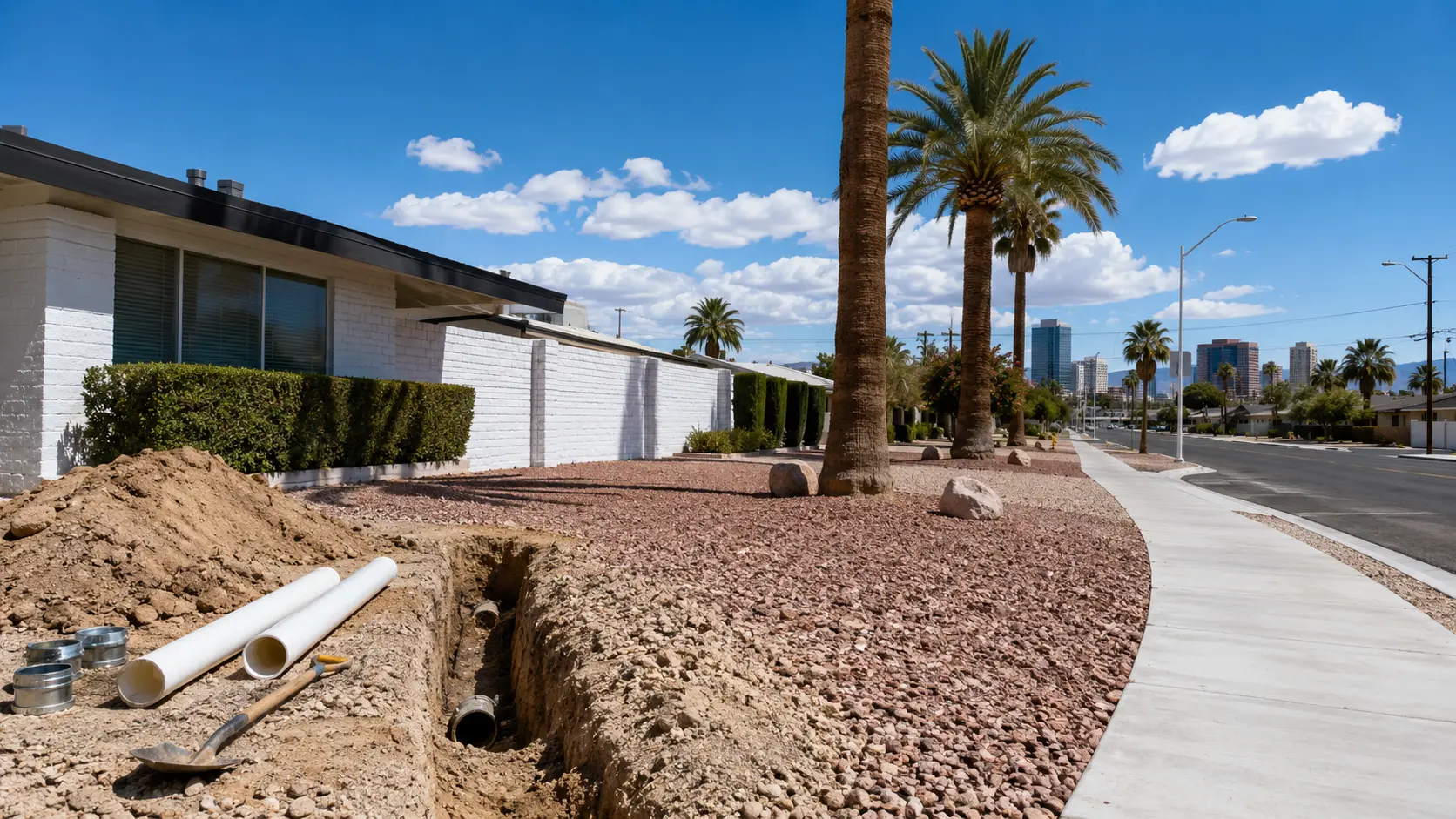
A repair starts with a camera and a locator. We find the fault, mark its position and depth on the surface, and measure how much pipe is genuinely compromised. That is what keeps a repair a repair instead of turning into a replacement by default.
Then we lay out the options honestly: a spot repair where the damage is contained, trenchless lining or bursting where the run is failing along its length, or an open cut where the alignment leaves no alternative. You see the same footage we do before deciding.
- Camera inspection and locating
- Surface marking with depth
- Spot repairs where possible
- Trenchless options assessed
- Permit handling where required
- Warranties on completed work
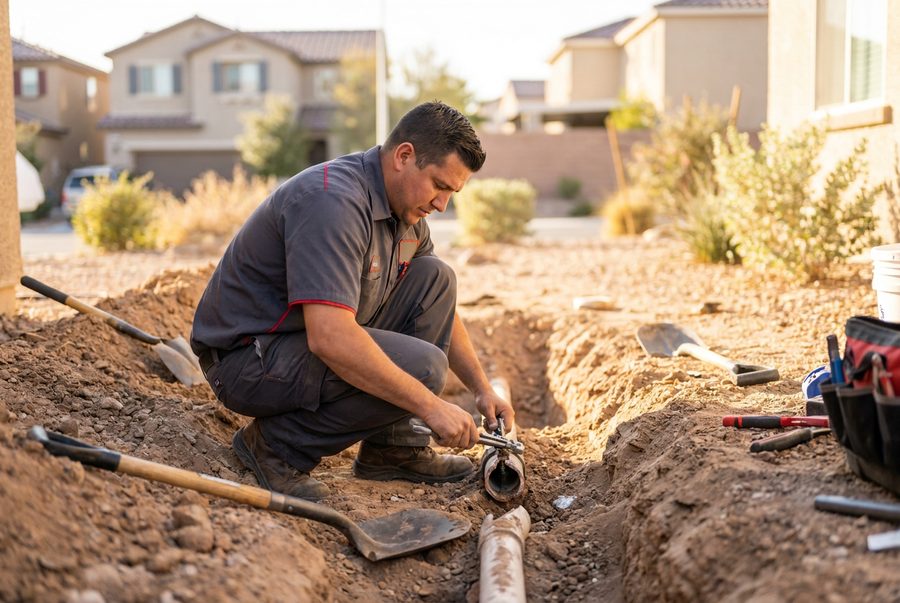
What a Sewer Repair Visit Covers
No two properties are identical, so we match the work to what we actually find on site.
Not just the fault; the whole lateral, so a second problem is not left behind.
Position and depth marked above ground before anyone talks about digging.
We establish how much pipe is actually compromised rather than assuming the worst.
Spot repair, lining or replacement, carried out to code with the yard protected.
A second camera pass after the repair confirms flow and alignment.
You see the price and the options in writing before any work starts, so nothing about the bill is a surprise.
From First Call to Final Cleanup
We provide a clear arrival window and confirm your contact information.
Our technician reviews the issue with you and explains the findings in plain language.
We outline your options with a straightforward estimate before any work begins.
We finish the work, test the system, and review tips that help prevent a repeat.
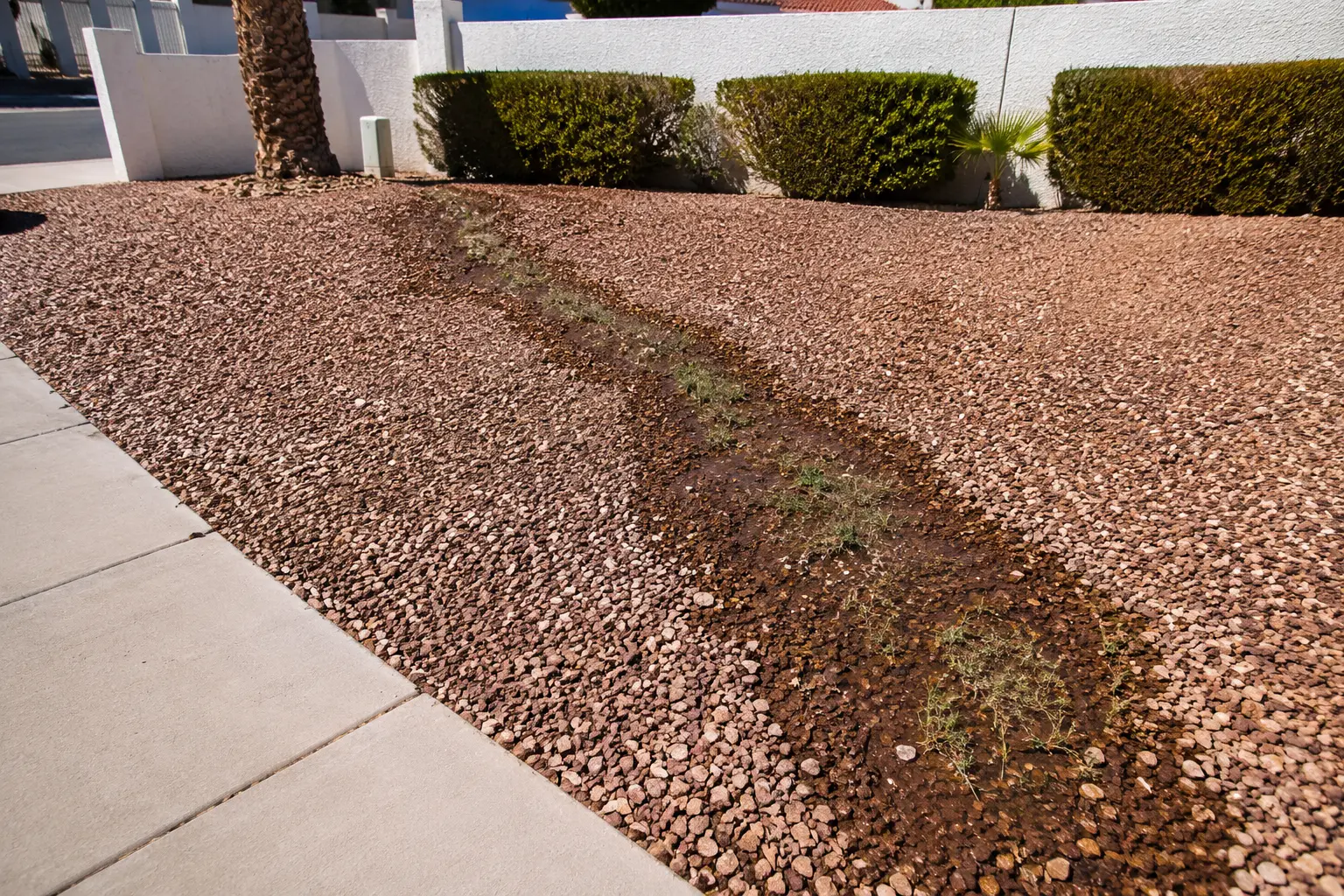
Signs a Sewer Line Needs Repair, Not Cleaning
Cleaning buys time. These symptoms mean the pipe itself is the problem.
A line cleared twice in a year has something structural holding waste up.
Roots enter through a defect. Cutting them is temporary; the gap they came through is the repair.
A belly holds water permanently, and waste settles in it every time the house drains.
Soil movement can pull a joint apart, leaving a lip that catches everything passing.
Effluent escaping into the soil shows on the surface long before the line collapses.
Mid century cast iron corrodes from the inside and eventually loses its bottom entirely.
What Damages a Sewer Lateral
Roots cause more sewer repairs than anything else. They exploit an existing hairline gap, expand it as they grow, and eventually break the joint apart from the inside.
The valley sits on caliche and soil that shifts with heat and the occasional heavy monsoon. Buried lines get pulled slightly out of alignment, and that is usually where a problem starts rather than in the middle of a straight run.
Material age finishes the job. Cast iron scales and corrodes, clay cracks under load, and early plastic goes brittle. The camera tells us which failure mode we are looking at, and that decides whether lining is even possible.
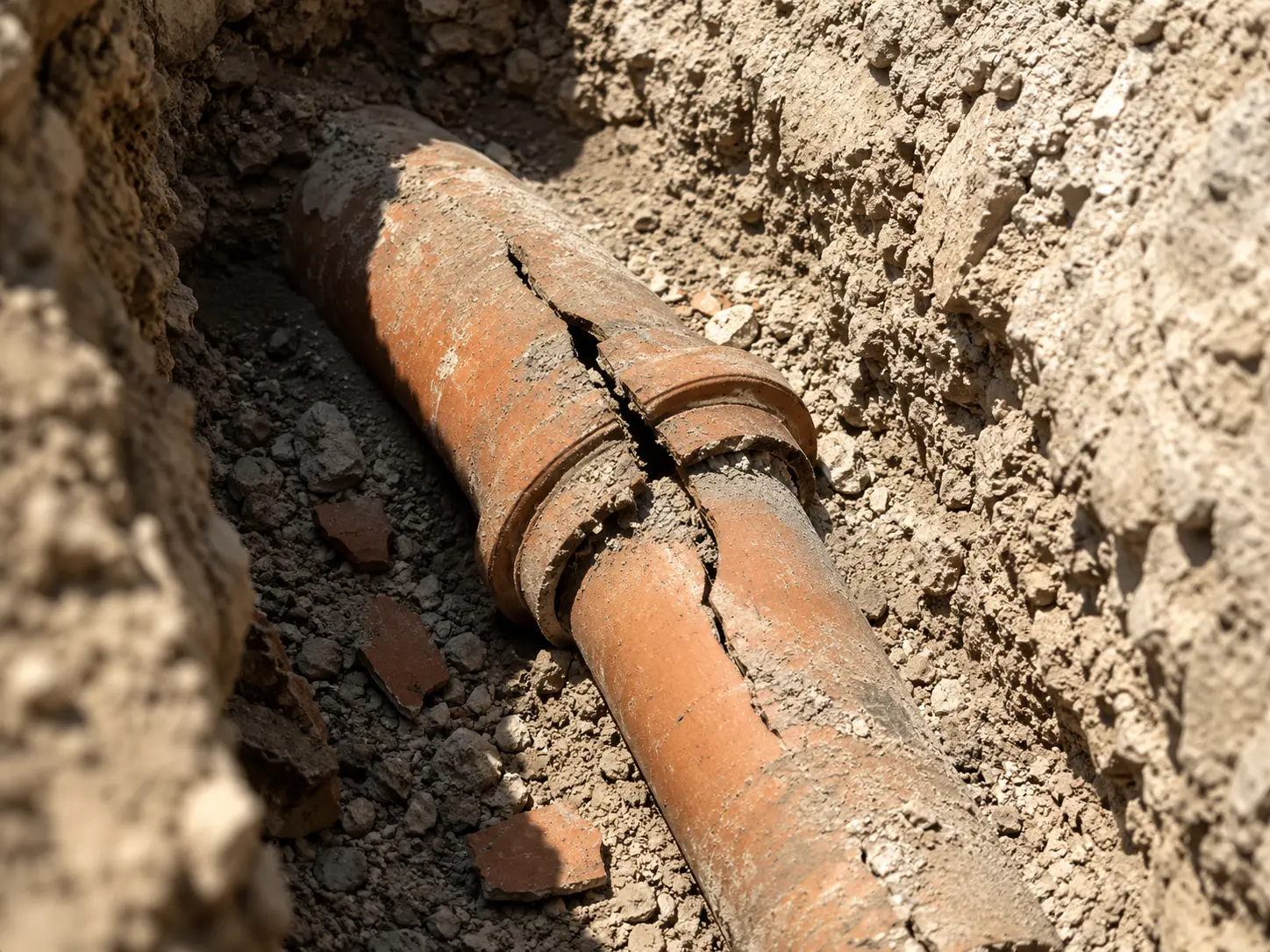
The right repair is the smallest one the camera footage supports. We will show you the footage.
What Affects the Cost of Sewer Repair
Every property is different, so we look before we quote. Here is what actually moves the number.
A single failed joint and thirty feet of deteriorated line are very different scopes.
Depth drives excavation time, and concrete or a driveway above the line adds restoration work.
Spot repair, lining and full replacement each carry a different cost profile per foot.
Where a municipal permit and inspection apply, we handle the process for you.
You get a free inspection and a straightforward written estimate before any work begins. Honest, upfront pricing with no hidden fees and no surprises later.
What Las Vegas, NV Customers Say About Our Sewer Repair
Serving Clark County and Henderson
We work on homes and light commercial properties across the valley. Do not see your city listed? Give us a call.
Fix the Break Before It Floods
Send us the symptoms and we will locate the failure point and quote the repair in writing, spot fix or full section.
Frequently Asked Questions
Often yes. If the camera shows a single failed joint or a short damaged run and the rest of the pipe is sound, a spot repair is the right answer. We only recommend replacing the full lateral when the footage shows the whole run is failing.