Most homeowners only think about their drains when the water stops going down. By that point the line has usually been narrowing for months, sometimes years.
Drain work covers three separate jobs: clearing what is in the pipe, repairing the pipe itself when it is damaged, and keeping the system clean so it stops surprising you. Knowing which one you actually need is what keeps you from paying for the same service call twice.
- Slow drains and repeat clogs are buildup, not bad luck
- A drain that backs up after clearing usually has a pipe problem
- Several slow fixtures at once points at the main sewer line
- Yearly maintenance costs far less than an emergency clear
Drain Cleaning Is More Than Removing A Clog
Grease, soap scum, hair, food waste and hard water minerals coat the inside of a pipe a little at a time. The opening keeps shrinking until an ordinary amount of water no longer fits through it.
Store bought chemical cleaners eat a channel through the middle of that buildup and leave the rest behind, which is why the same drain clogs again a few weeks later. Professional cleaning scours the pipe wall so the line goes back to full diameter.
- Water draining slowly in one or more fixtures
- The same sink or tub clogging over and over
- Gurgling from a drain when another fixture runs
- A sour or sewer odor coming up out of the drain
- Water rising in a nearby fixture when you run water
When Clearing The Drain Is Not Enough
Sometimes the clog is a symptom. If a line keeps backing up after it has been cleared, something about the pipe itself is catching debris.
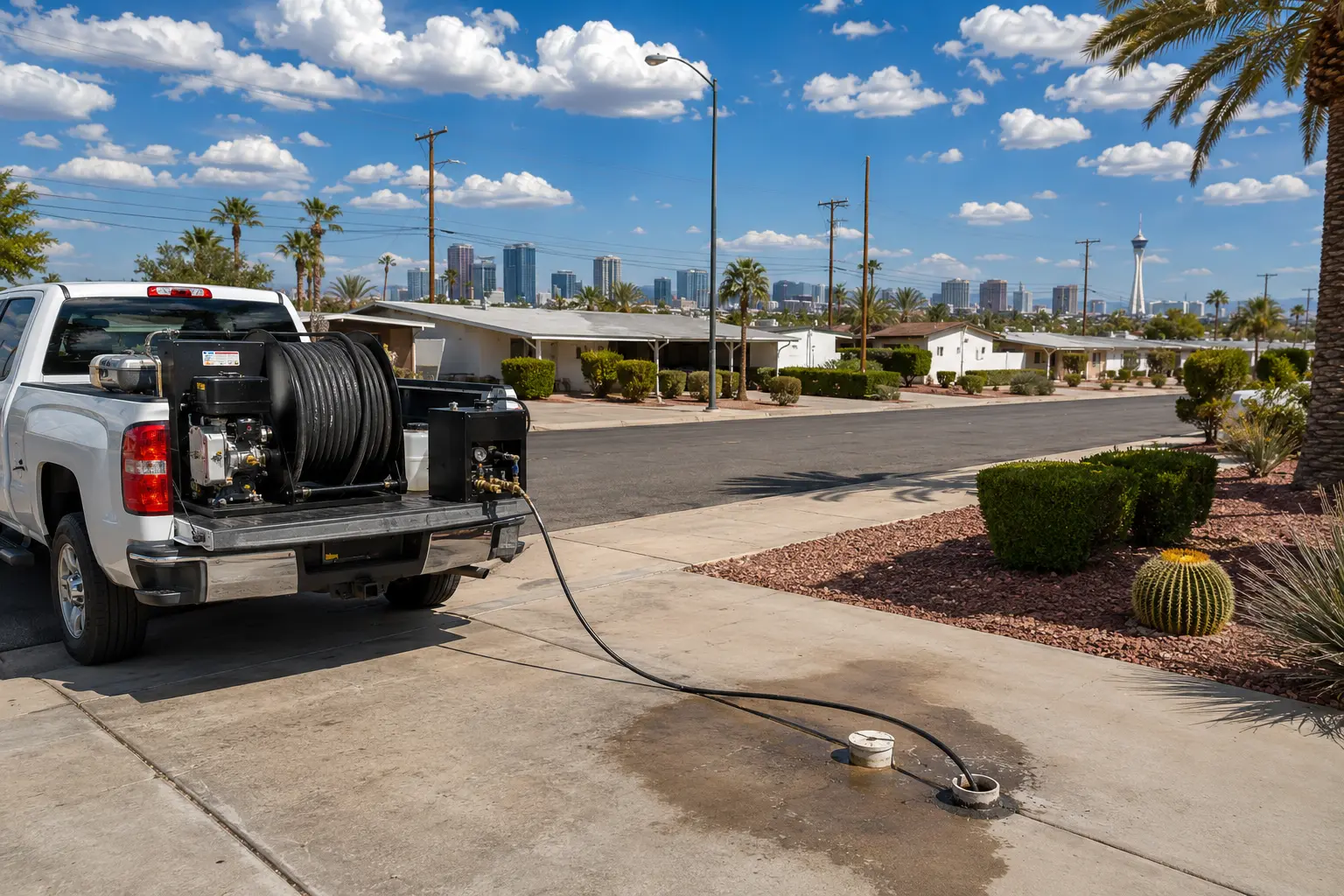
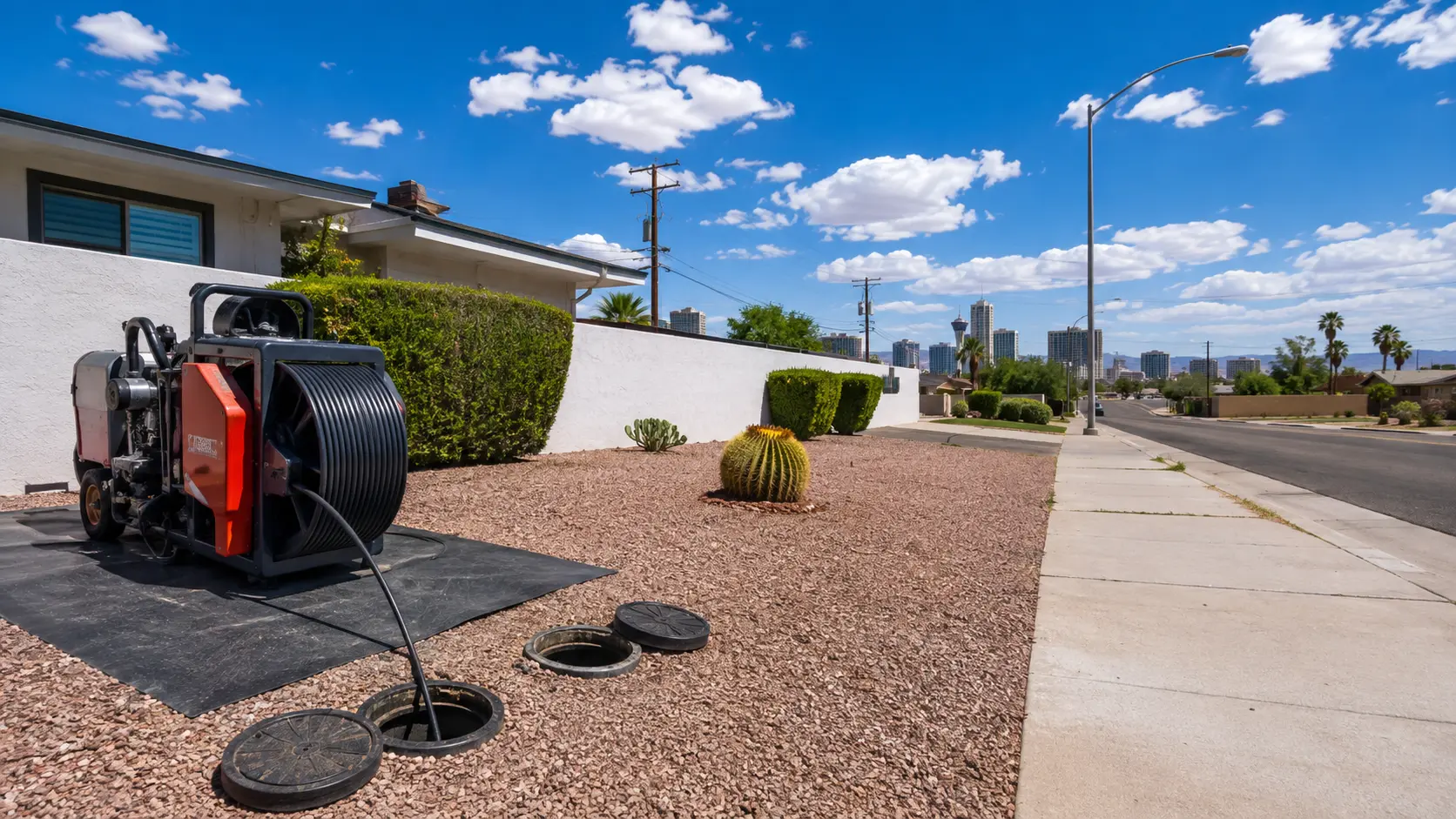
A camera inspection settles the question in a few minutes. We put an eye inside the line and see exactly what is happening instead of guessing from the outside.
- Cracked or split drain pipe
- Corroded cast iron that has gone rough inside
- Offset joints where two sections no longer line up
- Root intrusion at a fitting or seam
- A belly or low spot that holds standing water
- A broken or buried cleanout
The Connection Between Your Drains And The Sewer Line
Every fixture in the house eventually feeds the main sewer line. When that main is restricted, the problem shows up at the lowest and weakest points first, usually a tub, shower or floor drain.
If more than one fixture is misbehaving at the same time, stop treating them as separate clogs. That pattern almost always means the main line needs attention.
- Multiple drains slowing down together
- A toilet that bubbles when the washer drains
- Sewage smell in the yard or along a wall
- Water backing into a shower when a toilet flushes
Why Preventive Drain Maintenance Pays For Itself
Emergency drain calls happen at the worst possible time, usually on a holiday with the house full of people. Maintenance moves that work to a Tuesday morning when it costs less and nothing is at stake.
A yearly visit is short: we look at the problem fixtures, run a camera on a line with a history, clear anything that is building up, and tell you what to watch. Homes with older cast iron or a history of roots benefit the most.
- Camera evaluation of lines with a repeat history
- Removal of early buildup before it becomes a blockage
- Cleanout access checked and cleared
- A written note of what we saw and what to expect next
What To Do Right Now
If one fixture is slow, that is a drain cleaning call. If it keeps coming back, ask for a camera inspection before paying for another clearing. If several fixtures are slow at once, treat it as a sewer issue and get it looked at before it backs up onto the floor.