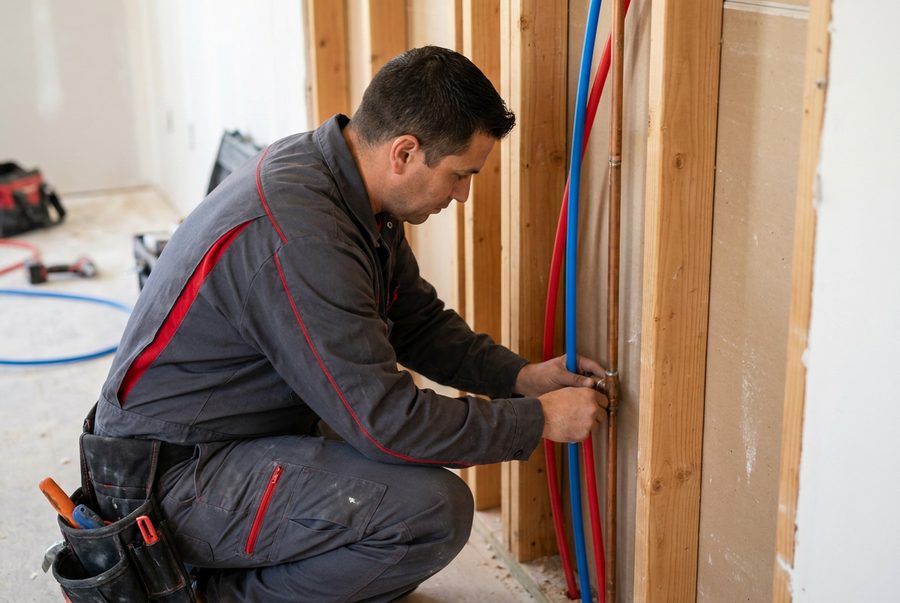
Repairing a pipe and repiping a house are answers to two different questions. The first fixes a failure. The second retires a system that has started failing on its own schedule.
The deciding factor is rarely the leak in front of you. It is the material in the walls and how many times you have already been here.
- One isolated leak in sound pipe is a repair
- Repeat pinholes in the same material mean the run is done
- Hard water and old galvanized age faster here
- A repipe is disruptive once, repairs are disruptive repeatedly
What Is Actually In Your Walls
Material tells you most of what you need to know about remaining life.
- Copper, long lived but prone to pinholes in aggressive water
- Galvanized steel, corrodes from the inside and chokes pressure
- CPVC, fine until it goes brittle with age and heat
- PEX, flexible and the usual choice for repipes today
When A Repair Is The Right Call
If the rest of the system is healthy and the failure has an obvious cause, a targeted repair is the honest answer.
- A single leak with no history in the same line
- Damage from an impact, a nail or a freeze event
- A failed fitting or valve rather than the pipe body
- Piping that is otherwise within its expected service life
When Repiping Makes More Sense
At some point the repairs stop being repairs and start being installments on a repipe you have not scheduled yet.
- Two or more pinhole leaks in the same material within a year
- Rusty or discolored water at multiple fixtures
- Pressure that has dropped house wide over time
- Galvanized supply lines still in service
- A remodel that already has walls open
Cost, Time And Disruption
A repair is cheap and fast, but each one comes with its own drywall patch and its own day off. Three of them add up quickly.
A repipe is one planned project with one round of patching and painting, and it resets the clock on the entire supply system. Most homes are back on water the same day, with finish work following.
How We Decide With You
We inspect the exposed runs, check pressure and water quality, and look at the failure history before recommending anything. If a repair will genuinely hold, we say so.
When a repipe is the better use of your money, you get a written scope, a materials list and a timeline before you commit.